

Learn more about the pros and cons of each method
Forging is one of the most widely used ways of shaping steel. It is popular in production because, compared with other methods, it saves a great deal of raw material.
Cold forging (cold pressing)
Cold forging, also called cold pressing, is one of the oldest methods in metalworking. The metal blank is pressed into the desired shape with a tool or die.
Both hot and cold forging come in several variants, including hammering, hydraulic and impact pressing, roll forging, heading and upsetting.
How forging processes are classified
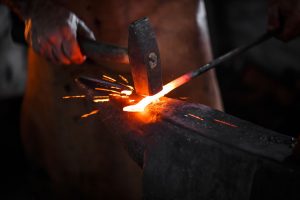
Forging processes are first divided into open-die and closed-die forging. Open-die forging is typically used for parts with looser dimensional tolerances. For example, reducing the diameter of a bar, or turning a round bar into a square or hexagonal section, is done by open-die forging.
Closed-die forging
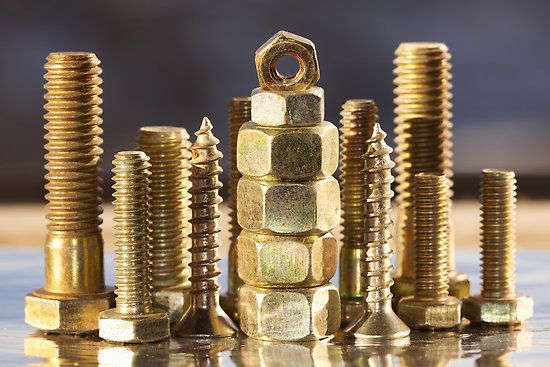
Closed-die forging is used to produce parts with predefined shapes and dimensions and tighter tolerances. Making industrial bolts from bar stock is a typical example.
Forging temperature
Forging is also classified by temperature, which is the subject of this article: forging at low temperature is called cold forging, and forging at high temperature is called hot forging.
Cold Forging
Cold forging changes not only the shape of the metal but also its properties, including ductility, strength and durability.
Cold-pressed parts also offer higher geometric accuracy, a better surface finish and better wear resistance.
Cold-forged components are used across many industries, including aerospace, and generally wherever safety-critical parts are needed.
Why forging and pressing?
Forging reduces production costs. If your own production is running behind, it often makes sense to outsource intermediate parts to a plant equipped for forging and pressing.
Another reason to outsource is that developing a forging process involves trial and error on the forging tools themselves.
Forging is a nonlinear process, so numerical simulation requires robust numerical methods, although classical development methods remain very practical. FORGE is one of the most widely used simulation packages in the industry.
Advantages of cold forging
The most important advantages of cold forging are very high dimensional accuracy and no surface oxidation.
- In high-volume production it uses less energy and is more economical.
- It can produce very small parts in large numbers.
- Medium-sized parts can be made in several stages at very high speed and accuracy.
- It needs fewer operators.
- More complex parts can still be produced by machine.
Disadvantages of cold forging
- Dies are expensive to make.
- Operators must be skilled with the equipment.
- Parts larger than about 39 mm cannot be produced.
- It is not economical for small production runs.
- Long, thin parts cannot be produced.
Hot forging
Each metal has its own forging temperature. Most metals can be forged, including carbon and alloy steels, aluminium and its alloys, and brass, copper and their alloys.
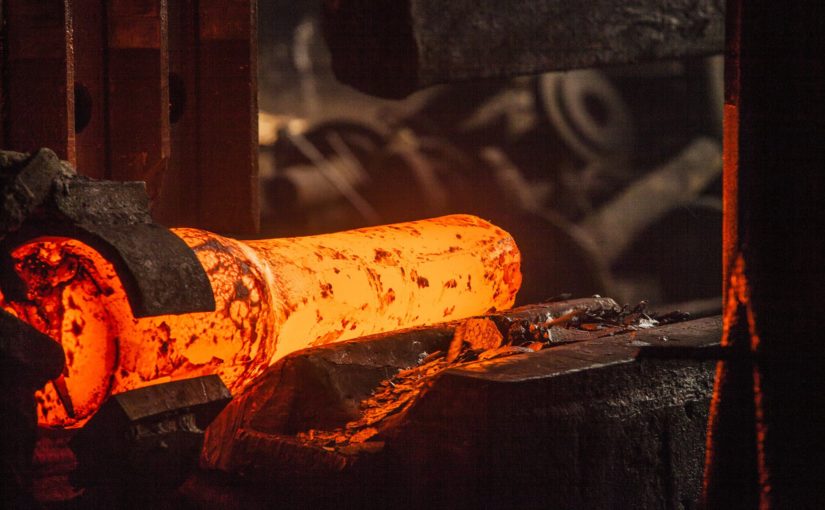
In hot forging, the part is heated above its recrystallisation temperature. During forging, heat flows from the hot part into the die, so the part cools as it is formed, which can cause its properties to vary through the process.
Advantages of hot forging
- Many of cold forging’s limitations are hot forging’s strengths: medium to very large parts can be produced at a reasonable cost.
- Fewer production steps are needed.
Bolts are usually made in a single step.
- High-strength metals can be formed easily.
- Unlike cold forging, there is no specific limit on part length or size.
Disadvantages of hot forging
- The heating process must be controlled precisely.
- Surface oxidation is common and requires shot blasting or pickling.
- Dimensional accuracy, speed and production volume are lower than with cold forging.